
You Can Fund a Comic and Lose Money
Shop Talk

Here’s the part about Kickstarter most people don’t want to hear: A lot of comics aren’t making money. Some are losing money—even when they hit their funding goal. Because the investment can and often does exceed the funds. At some point between coming up with an idea and delivering a finished product, there has to be profit. Maybe that comes later—moving the book into stores, landing a publishing deal, something bigger down the line.
This is a business. I make sure everyone gets paid according to our agreements. But I do everything except draw and color—and for a long time, I didn’t pay myself. I reinvested in the work. The original plan was simple: fund the comic, then move it into publishing and retail where I would make back my time and creative investment. That changed.
Shortly after DC Comics moved to Burbank and the work dried up, I pitched a story to a small publisher and attached an artist. They suggested I take the comic to Kickstarter to see how it performed—and then hired the artist for one of their in-house books. That’s business.
At the time, I still wanted to do work-for-hire to subsidize the books that meant something to me personally. And before that, I turned to Kickstarter. It started slow. Then it spiked with Spicy Pulp. A 64-page comic. Three artists. Full color. Printed in the U.S. I was lettering it myself, learning on the job, juggling deadlines—and the campaigns were doing well. But delays happen. Artists take other work—as they should. Production slipped. And a 64-page full-color book printed in the U.S. is expensive.
Here’s where I started making mistakes. Laying out money in advance for projects like that is terrifying. Using one campaign to fund the next is worse. At first, it worked. Campaigns were funding at a high level. Spicy Pulp 35 hit 30K, and like an idiot, I treated that like a baseline. Then things shifted. Kickstarter got crowded. Some campaigns made the platform look bad by failing to fulfill while keeping funds. Covid hit. Costs went up. Attention shifted. Funding started to drop. I lost momentum on some books. Tried to pivot. Changed direction. Nothing stuck.
Then everything outside of comics went sideways. I lost my dog to a brain tumor. I lost seven months of work on a project that never got paid and never saw print. By August of 2023, a tree took out my house. I made bad decisions based on emotion instead of logic. Blue Geisha 4 was delayed. I Eat Monsters stalled. Then in 2024, I ran my first failed Kickstarter campaign. It started on BackerKit as part of a comics event I felt good about. Within a few days, it was obvious the campaign wasn’t going to make it. I panicked and moved it to Kickstarter. Didn’t matter.
Here’s the real lesson: it wasn’t a project that fit crowdfunding. I could have hit the goal—and still lost money. It’s a good book, but it’s a slow-burn crime story, and that’s a hard sell in a system that rewards instant hooks. A failed issue #1 of a planned five-issue story is dead on arrival.
The issue was already paid for. Two covers. Full production. And my confidence in the project was so high, we were already in production on issue #2.
I ate that cost. It sucked.
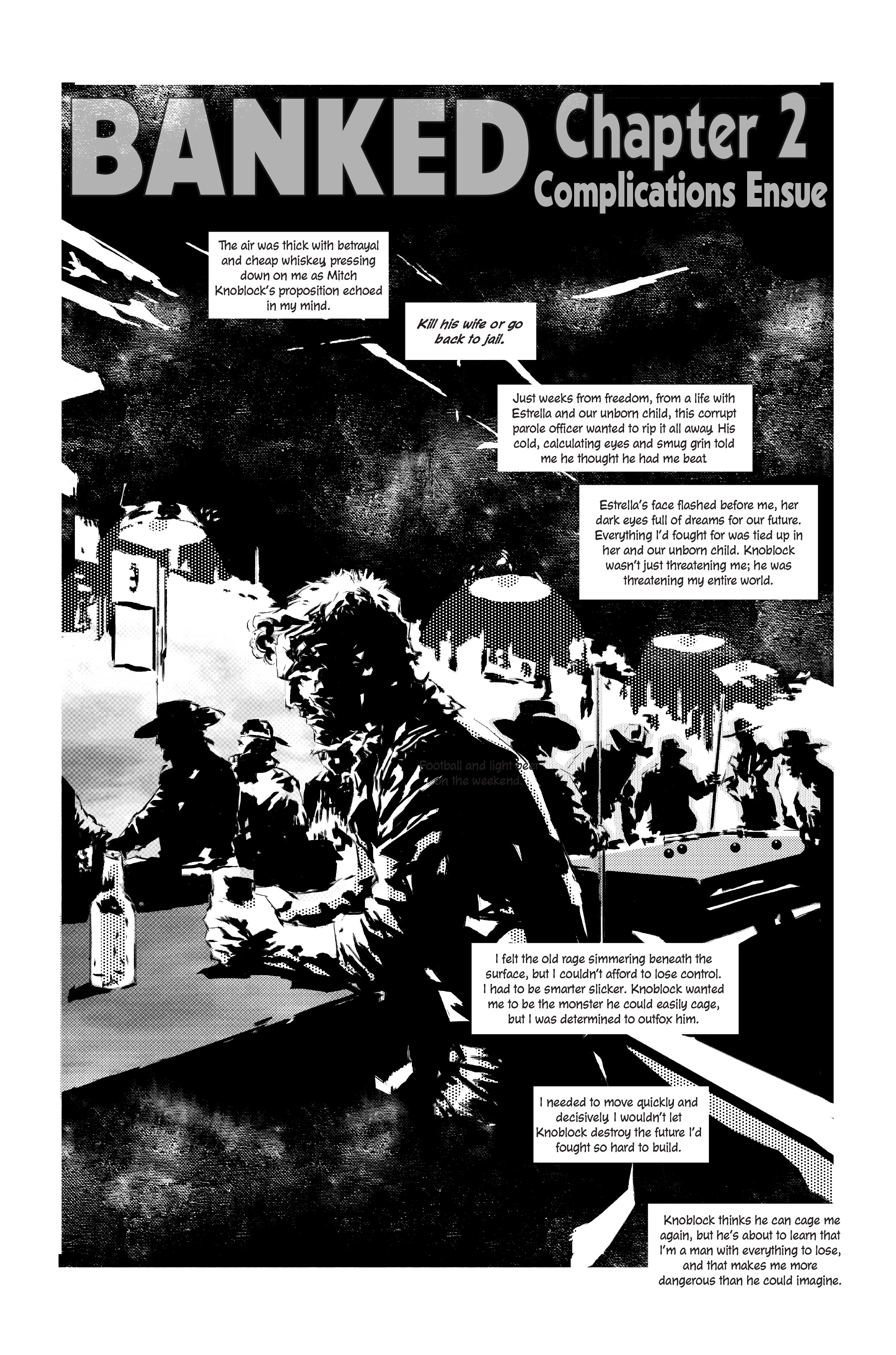
Even for as dense as I can be sometimes, that made things very clear. I could either walk away from comics—or evolve. So I changed the focus. Everything shifted toward improving the Kickstarter experience—for the backer and for myself. There’s an old saying: you dance with the one that brung you. So the question became: how do I get more readers, more backers—and how do I survive the life cycle of Kickstarter? That’s the one that matters. I’ll get into how I approached that—and who has successfully unplugged their reliance on other platforms—next time.

Until then, if you are interested in backing my next campaign Voltessa Masquerade of the Macabre you can do so by clicking the link. You can see the black and white art for the main cover to the latest story.
The theme with the hands was completely subconscious. Funny how that happens sometimes.
And yes, I’m deliberately modeling these after my childhood love of Marvel Comics covers. I can still remember staring at those covers—before I knew anything about the story—trying to figure out what was happening, what kind of trouble the character was in, whether they were going to make it out of it.
That’s the feeling I’m channeling.