
I Was Doing This Wrong
Kickstarter mechanics

Let’s open this up with a big thank you to everyone who helped make the last Blue Geisha campaign the most successful one to date. I’ve only run two comic campaigns since 2023, and aside from everything happening in the real world, it’s been rough knowing I left a lot of you hanging with storylines on hold. That’s something I’m working to fix now. I’m doing everything I can to get things moving again and keep them moving. In order to treat Kickstarter like a business, I had to shut off a lot of my creative instincts. Not because they’re wrong—but because they can pull you toward decisions that “feel” right instead of ones that actually work. And this time, the goal was simple: get better at the business side of this.
I still have a lot to learn. Blue Geisha was a 24/7 operation for the last six months. I took a hard look at where I was—and how my campaigns were underperforming. The ceiling I was hitting wasn’t sustainable. If I didn’t make changes, I wasn’t going to be able to keep producing comics. It was that simple.
Part of that is the reality of Kickstarter, like any platform, evolves. What worked before doesn’t always work now. So, I studied dozens of campaigns—what works, what struggles, what flat-out fails. Broke them down piece by piece. And there were some things in there I didn’t expect. To do that properly, I had to stop looking at everything from a creative perspective.
What I started to see is that there are a handful of models in play—and a limited number of backer types driving most campaigns. You can learn a lot just by looking at a campaign page. Not just what it’s selling—but how it’s structured, and why it’s working…or why it isn’t. Some campaigns are clean and focused. Others are cluttered, overbuilt, hard to follow. A lot of them leave money on the table. And then there are the outliers—the ones that succeed no matter what. Usually because of built-in advantages: brand recognition, or a creator coming in with an audience from a major publisher. That kind of momentum can carry a campaign even if the structure isn’t doing it any favors.
Now—one of the big ones everyone knows: Variant covers. You’ll see campaigns running anywhere from three to thirty. Whether you like them or not, they work. They can push a campaign higher—even when the interior art isn’t at a pro level. But it’s not as simple as stacking covers on a page. Not every campaign can sustain variants even if they imitate successful campaigns. Not every audience responds to them the same way. And some genres make it a lot easier to sell them than others.
Having visually appealing characters in a given genre matters whether you like that genre or not. Bleeding Pulp and Spicy Pulp characters are built with that in mind. Distinct. Recognizable. Designed to stand apart from each other, but also stand side by side branding-wise. That’s why variant covers work on books like Blue Geisha, Lady Redbeard, or Voltessa.
Standstill was different. Even with covers I personally loved, it couldn’t compete with the other line. It had a loyal audience—but it hit a ceiling. Around 10K on a good campaign. And I pushed myself on that book. Two issues at a time. 40+ pages of art. A lot of work on the writing side. Branko putting in serious effort on the art. Didn’t matter. It wouldn’t scale. We were funding—and overfunding—just to break even and keep it alive. At that point, it’s not a business. It’s a hobby. And there were other factors behind the scenes—differences in how the book would be structured going forward—that made the decision clear. So, I shut it down. Ending it as cleanly as I could for the people who were following it. I loved that comic. I quickly realized I have a few comics I’d love to do but I cannot figure out how to make them profitable on Kickstarter.
I’m confident NSFW content probably won’t land “Project We Love” status, but that doesn’t mean the internal mechanics of Kickstarter won’t give the campaign a push if it see’s that it is doing well. Same kind of push without the status and fanfare, which I’m fine with. Speaking of what makes campaigns successful, a strong launch day can do amazing things for the KS algorithm. You can help by signing up to be notified when Voltessa Masquerade of the Macabre goes live. What is Voltessa?
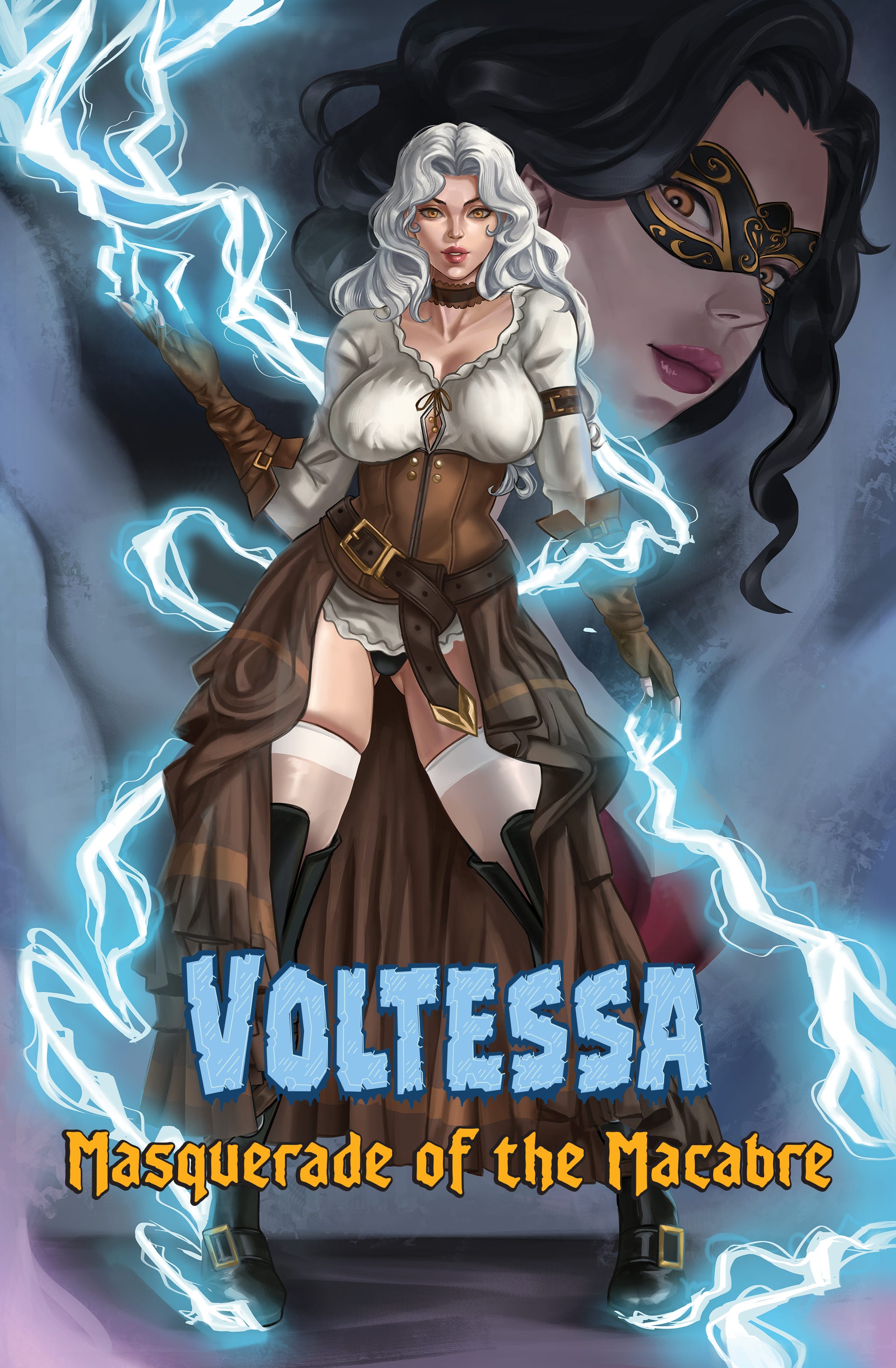
If you like comics where you can pick up any issue and get a complete story without having to know years of continuity, that’s exactly what I’m doing with Voltessa. Her origin, The Electrifying Voltessa, was a gothic sex comedy set in a “Frankenstein” universe, where the Doctor resurrects an innocent farm girl only to turn her into a monster. This is built off the Marvel style of comics from the 60s–70s, especially the supernatural line, only with a lot of spicy stuff and a dash of humor.
This coming Halloween, Voltessa: Masquerade of the Macabre debuts, and our heroine encounters her first true supernatural enemy—Lady Syphra. A 28-page story packed with sex and monster fighting.